











Profile
The year of 1896 was a memorable year to All Japan Seamen’s Union. For it was in January of 1896 that 68 ship’s officers set up the Kai-in (Seafarers) Club in Kobe, which was the forerunner of our Union and Japan’s first seamen’s labour organization.
In 1921, 23 Japanese seamen’s organizations united to form the Nippon Kai-in Kumiai (Japan Seamen’s Union). The movement was inspired greatly by the experience of the seamen’s representatives who participated in the Second General Conference (First General Conference on Maritime Affair) of the ILO which was held in Genoa, Italy in 1920.
In 1924 during the General Conference of the International Labour Organization, the union representative who attended had its first contact with the ITF. On October 26,1929, the memorandum on affiliation to ITF was signed
In October 1945, only two months after the end of the World War II, the survivors and other maritime workers based on the pre-war experience formed the All Japan Seamen’s Union. It is an industrial union uniting officers, ratings and harbor seamen into a single organization and the maritime labour movement was resumed. Once again, the JSU joined in the ITF family in 1950.
In more than fifty years since then, the All Japan Seamen’s Union has faced gargantuan task but not insurmountable to become what it is today.
In these days the All Japan Seamen’s Union (JSU) is a trade union that organizes maritime workers engaged in foreign and domestic trades, fisheries and waterfront. JSU also organizes and covers non-domiciled seafarers employed in Japanese-beneficially owned fleet. As of July 2010, the membership of JSU is more than 76,000 and of them about 53,000 are non-domiciled special members.
Mission
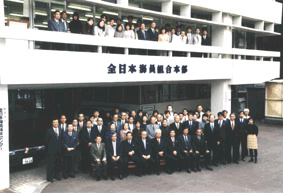
The All Japan Seamen’s Union is committed to improve the working conditions and social status of its members. Furthermore, the JSU also pledges to defend the seafarer’s rights and play socially important roles in developing the full potential of every individual member by building their technical competence and instilling in them a concern for safety and environmental protection.
JSU Activity
- JSU attends various ITF meetings as a major affiliate in order to play an important role in drafting ITF policies as well as its implementation.
- JSU negotiates with Japanese shipowners in relation to the IBF agreements accepted by the ITF covering all its non-domicile special union members and then the ITF will issue the Green Certificates for the agreement of the covered vessels.
- JSU makes sure that the implementation of all concluded agreements is properly carried out.
- JSU plays another important role to continuously exert its efforts in solving grievances from its non-domicile special union members employed in Japanese-beneficially owned fleet.